Blog · Process
Fence Installation Timeline: Quote to Finished Fence in Reno
Most cost guides tell you what a fence costs. Fewer tell you what actually happens, in what order, and how long each step really takes — this is that guide, built around how a Reno project actually moves.
Last reviewed September 9, 2026. Prices and rules are rechecked before each republish.
Quick answer
As of September 2026, a straightforward residential fence project in Reno typically runs two to six weeks from first quote to finished fence: a few days for quotes, one to three weeks for material lead time and any permit processing, and one to three days of on-site installation — longer in spring and early summer when storm-repair work backs up local crews.
Source notes and the full breakdown follow below. — Reno Apex Fence
Before you request a quote: 30 minutes that save weeks
The single biggest timeline killer in a fence project isn't the installer — it's a homeowner who requests quotes before deciding on the basics, then spends two more weeks going back and forth once several contractors have already measured for the wrong thing. Before you request even one quote, know:
Your property lines. If you have a recent survey or a plat map with visible pins, great. If not, budget time (and possibly a survey cost) for this before a crew shows up — moving a fence built even a few inches over the line costs nearly as much as building it once.
Your material. Wood, vinyl, and chain link each have different lead times (below) and different cost and durability tradeoffs worth deciding on before you're comparing five quotes for four different materials.
Whether you're in an HOA. If so, get your CC&Rs and start the Architectural Review Committee process in parallel with getting quotes — see HOA fence rules in Nevada. This step alone can add two to six weeks if you don't start it early.
Week 1: quotes and the site walk
Most Reno fence companies will do an initial site walk within a few days of a request, faster outside peak spring season. A real quote should come from someone who actually walked your property, not a phone estimate — the site walk is where a contractor spots the decomposed-granite soil that'll slow down post-hole digging, an uneven grade that changes the automatic-gate recommendation, or a property-line ambiguity that needs resolving before a number can be final. Expect the quote itself, by the linear foot, within a day or two of the walk. Installed per-foot pricing for the three most common materials runs $20–$50/ft for wood, $30–$60/ft for vinyl, and $9–$30/ft for chain link — the full breakdown, including whole-project ranges by length, is on the cost guide.
This is also the moment to run the two free checks that take five minutes and screen out most problems: confirm the company's NSCB license at app.nvcontractorsboard.com (see the license lookup walkthrough), and confirm any requested deposit doesn't exceed Nevada's legal cap — details on the best fence companies page.
Weeks 1–2: permit determination and HOA approval, in parallel
Whether your specific fence needs a Washoe County permit depends on height, location, and — honestly — which of the county's own published pages you're reading, since they don't fully agree with each other on the threshold. A contractor experienced with local permitting can usually tell you which way your project is likely to fall, but the guaranteed answer comes from Development Services at 775-334-2063. See the permit guide for the full explanation. Where a permit applies, Reno, Sparks, and unincorporated Washoe County all use the same portal, onenv.us — plan on several business days to a couple of weeks for review, depending on the office's current volume.
If you're in an HOA, this is the step to run in parallel, not after — many CC&Rs specify a 30- to 45-day review window for architectural requests, and starting it only after the county permit clears just adds the two timelines end to end instead of overlapping them.
Weeks 2–3: material lead time
This is where material choice changes the calendar the most:
Chain link is typically the fastest to source — often available within days for standard galvanized mesh, a bit longer for black vinyl-coated fabric or non-standard heights.
Wood (cedar or redwood) lead time depends on the local supplier's current stock; board-on-board or shadowbox styles that need more material per foot can take slightly longer than a basic picket run.
Vinyl often has the longest lead time of the three, especially for a specific color or a reinforced-rail grade, since panels are frequently special-ordered rather than stocked in bulk locally — ask your contractor for their supplier's current lead time at quote stage, not after you've signed.
Spring and early summer add a second delay on top of material lead time: Reno's windstorm season drives a surge in repair work that competes for the same crews and, sometimes, the same material stock as new installations. A project quoted in October can move noticeably faster than the identical project quoted in April.
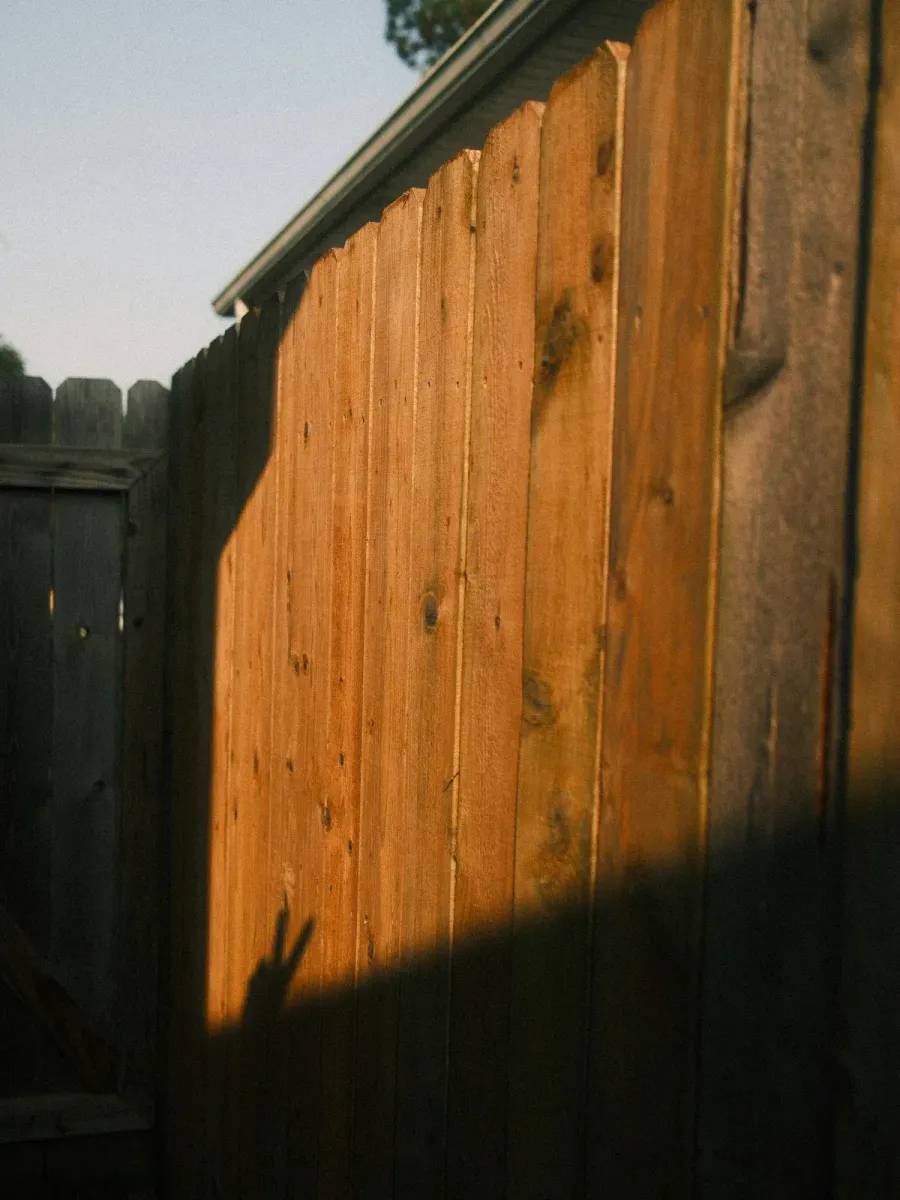
Installation: one to three days on site
Once materials and any required approvals are in hand, the physical installation follows the same general sequence regardless of neighborhood: a utility locate (call 811 before anyone digs — this is free and typically takes a few business days to clear), post layout and setting, then panel or picket installation once post concrete has had time to set. Most residential projects run one to three days on site. The step most likely to move that estimate in Reno specifically is post-hole digging: on the rocky, decomposed-granite ground common across the valley floor and every foothill neighborhood, a crew may switch from an auger to hand-digging or a jackhammer partway through a run, which can add a half-day or more to an otherwise straightforward job. A whole-project estimate for a typical 150-foot back yard runs $3,000–$9,000, and the cost guide has the full length-by-length breakdown plus removal and permit add-ons.
Peak season vs. off-season: a realistic comparison
"Two to six weeks" is a wide range for a reason — season matters more than almost any other variable. Here's roughly what to expect at each end:
-
Late fall through winter (off-season). Crews have more open scheduling, material suppliers aren't backed up with storm-repair orders, and a straightforward project can move through quotes, permitting, and installation in as little as two to three weeks. The tradeoff: frozen or saturated ground after a hard freeze can occasionally push post-hole digging out a few days, and some crews slow down or pause installation work during the coldest stretches.
-
Spring through midsummer (peak season). This is when Reno's windstorm season drives a surge in repair calls that compete with new installations for the same crews and sometimes the same material stock. A project that would take three weeks in November can stretch to five or six weeks in April or May simply because of the queue — not because your specific project got more complicated. If your timeline is flexible, requesting quotes in late winter for a spring install often beats waiting until spring to start the process.
Questions to ask a contractor about their specific timeline
A quote that states a price but not a timeline is an incomplete quote. Before you sign, ask:
"What's your current lead time to start, from a signed contract?" — this is separate from how long the job itself takes once started, and it's the number that most often surprises homeowners.
"What's the material lead time for what I've chosen?" — especially relevant for vinyl in a specific color or a reinforced-rail grade, which is often special-ordered.
"Has the permit determination been made, or is that still pending?" — a project can't have a firm installation date until this is resolved one way or the other.
"What happens to the schedule if we hit rock during post-hole digging?" — a fair contractor will tell you upfront how a rocky, decomposed-granite section could add time (and cost) rather than let it surprise you mid-job.
"Is there a written start date and estimated completion date in the contract?" — verbal estimates drift; a date in writing is what you can actually hold a contractor to.
If an old fence has to come out first
Removing an existing fence adds a step most homeowners don't budget time for. Old-fence removal and haul-away runs $10–$20 per linear foot on top of new installation, and it's worth confirming upfront whether it's included in your quote's timeline or scheduled as a separate visit — some contractors remove the old fence the same day they start the new one, while others schedule removal a day or two ahead so the site is clear and any surprises (a post set in an unexpected spot, buried debris, an irrigation line) surface before the new material shows up. If the old fence is on a shared boundary, revisit the neighbor conversation from the legal-literacy angle covered in Nevada fence laws homeowners actually need to know before removal day, not during it.
A realistic example, start to finish
To make the ranges above concrete: a homeowner in Spanish Springs requests quotes for a 150-foot vinyl privacy fence in early October. Three contractors walk the site within a week; two send written quotes within two days of their visit. The homeowner picks one, signs, and pays the legal deposit (capped at the lesser of a set dollar amount or a percentage of the contract under Nevada law — see the Nevada fence laws post for the exact cap). The contractor determines a permit isn't required for this specific lot and height, so there's no permit-review wait. The chosen vinyl color has a two-week supplier lead time. Installation itself takes two days once material arrives, including one afternoon of hand-digging through a rocky section near the back corner. Total elapsed time from first quote to finished fence: about three and a half weeks — solidly inside the two-to-six-week range, and faster than it would likely run in peak spring season.
After installation: what to check before final payment
Walk the entire fence line and confirm it matches the quoted layout and property lines.
Check that every gate swings or slides freely and latches securely.
For wood, confirm posts are set in concrete and ask about the recommended staining timeline (typically within the first season, then every two to three years after — see the material comparison for why this matters in Reno's sun).
Confirm old-fence removal and site cleanup were completed if that was part of the scope.
Get any warranty terms — on materials and on labor — in writing before final payment, not verbally at handoff.
Notes. Timeline ranges in this post are general guidance based on typical residential project patterns and Washoe County's published permitting structure, not a guarantee for any specific project — get a firm timeline in writing from your contractor at quote stage. Cost figures: HomeGuide, Fence Installation Cost (Feb 2026), national contractor estimates; see the cost guide for Reno-specific installer and quote-aggregate data.
Frequently asked questions
How long does it take to get a fence installed in Reno, start to finish? +
For a straightforward residential project, roughly two to six weeks from first quote to finished fence — a few days for quotes, a week or two for material lead time and permit processing where one applies, and one to three days of on-site installation.
What's the biggest scheduling variable for a Reno fence install? +
Season. Spring and early summer bring a backlog of storm-repair work that competes with new installations for the same crews, so a project started in April can face longer lead times than the identical project started in October.
Do I need to be home during installation? +
Not for the whole job, but you should be available at the start (to confirm the layout with the crew) and at the end (to walk the finished fence line before final payment).
What slows down a fence installation the most in Reno specifically? +
Rocky, decomposed-granite soil on the valley floor and in the foothills, which can force a crew to switch from an auger to hand-digging or a jackhammer partway through a run — the same condition that pushes some quotes higher than a flat, easy-digging lot would.
Can I speed up the timeline? +
Having your property lines already marked (or a recent survey on hand), getting HOA approval submitted early if you have one, and choosing a material and style before you request quotes are the three things most within a homeowner's control.
Get matched with a local fence pro
No obligation. We'll connect you with an independent local contractor.