Vinyl fencing · Reno, Sparks & Washoe County
Vinyl Fence Installation in Reno, NV
What a vinyl fence costs here, the grade differences that decide whether it survives the wind, how privacy, picket, and ranch-rail styles map onto Washoe County's height rules, and an honest vinyl-vs-cedar comparison for Reno's climate.
Last reviewed September 9, 2026. Prices and rules are rechecked before each republish.
Quick answer
As of September 2026, vinyl fence installation in Reno, NV runs about $20–$35/ft for solid privacy panels at one local installer's published rate and $30–$60/ft on national contractor averages — so a 100-foot 6-foot privacy run lands around $2,000–$6,000 installed, before gates or old-fence removal.
Source notes and the full breakdown follow below. — Reno Apex Fence
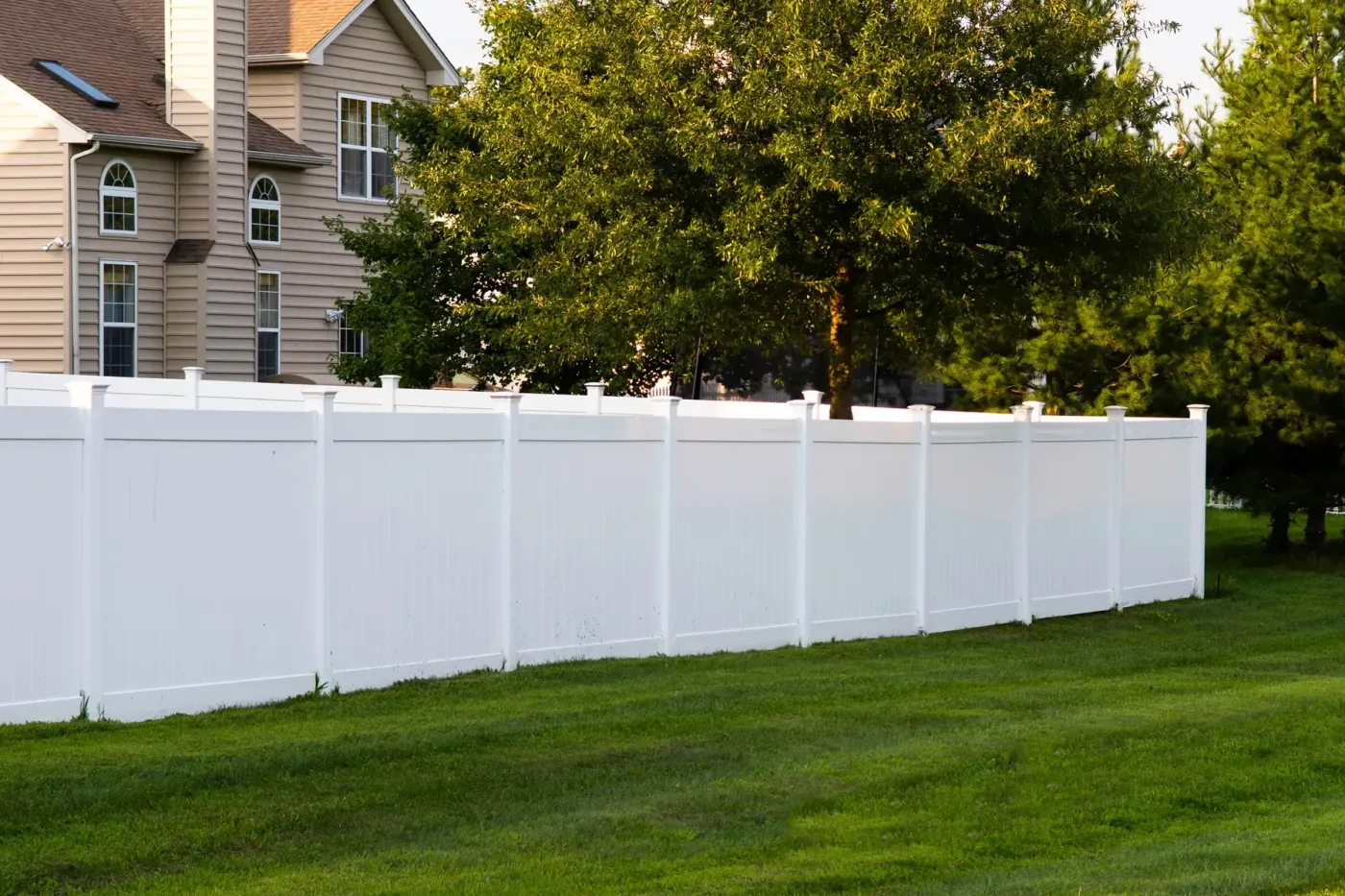
Vinyl fence cost in Reno
Vinyl is priced per linear foot installed, and style matters more than for any other material: a solid privacy panel uses far more material than an open picket or a two-rail ranch fence. One Reno installer publishes its rates by style, which is unusual — most local companies quote only after a site visit — so those are shown next to the national band.
| Style | One Reno installer's published rate | National range |
|---|---|---|
| Solid privacy (6 ft) | $20–$35/ft | $30–$60/ft |
| Picket (3–4 ft) | $15–$35/ft | $20–$50/ft |
| Ranch rail (2–3 rail) | $20–$30/ft | $15–$35/ft |
| Materials only, privacy | — | $25–$45/ft |
Whole-project math: a 150-foot back yard in 6-foot privacy at the middle of the national vinyl band is about $6,750; at the middle of the Reno installer's published rate it's about $4,200. Both exclude gates, removal of an old fence ($10–$20 per linear foot), and any permit fee ($40–$150). The gap between them is mostly what a flat, clear, straight run saves you — hillside lots, rocky post holes, and lots of corners pull a real quote toward the national figure.
The vinyl grade question — what actually matters in Reno
"Vinyl fence" covers everything from a big-box panel to a commercial-grade extrusion, and in Reno the difference shows up the first windy afternoon in April. Four specs separate a fence that lasts from one that cracks:
-
Wall thickness. Post and rail wall thickness is the number that determines stiffness. Ask for it in inches; a thicker-walled post flexes less in a gust and won't crack at the rail pocket, which is where cheap vinyl fails first.
-
Reinforced bottom rail. A 6-foot privacy panel puts the whole wind load into the rails. Good panels carry an aluminum or galvanized-steel insert in the bottom rail (sometimes the top too). Without it the rail bows and the pickets pop out. This is the single spec most worth paying for in Reno.
-
Virgin vinyl with UV inhibitors. Titanium dioxide is the UV stabilizer that keeps vinyl white and flexible; recycled-content or "utility-grade" vinyl skips it and goes chalky and brittle in high-desert sun. The yellowing people remember from 1990s vinyl was this. Ask for a written lifetime or 20-year-plus warranty against yellowing, cracking, and peeling — a manufacturer that won't put it in writing is telling you something.
-
Post embedment. This is the installer, not the product. Vinyl posts are hollow sleeves over a concrete footing (or over a steel or wood insert in some systems); the footing has to go below Washoe County's 24-inch frost line and be set in concrete, or the freeze-thaw cycle heaves the post and the panel racks.
Matching a vinyl style to Washoe County's height rules
The county's zoning maximums decide which vinyl style goes where on your lot:
Side and rear yards — up to 6 feet. Solid privacy or semi-private (lattice-top) panels. This is where nearly all Reno vinyl goes.
Front-yard setback — up to 4½ feet. Picket, scalloped picket, or 3-rail ranch fencing. A 4-foot picket is the common front-yard choice; solid privacy isn't an option here.
Corner lots — 18 inches inside the sight triangle. Effectively nothing solid near the corner; a low 2-rail ranch fence or open picket, with 6 feet allowed once you're 10 feet back from the line.
Pool and spa areas. Separate safety-barrier rules apply on top of zoning height; vinyl's self-closing gate hardware is one of its advantages here.
HOAs in newer Reno and Sparks subdivisions frequently specify vinyl color (usually white or tan) and sometimes the exact style, and some require the HOA's approval before the county's permit. Check the CC&Rs first — see HOA fence rules in Nevada — and the full height table for the county rules.
Vinyl vs. cedar in Reno, over 20 years
Cedar is cheaper on day one — $20–$50 per linear foot installed against vinyl's $30–$60 per linear foot nationally. What changes the math in Reno is the sun. Unstained cedar at 4,500 feet grays, checks, and starts shedding fasteners within a few seasons, so a wood fence here needs a stain or sealer every two to three years to reach a 15–20 year life, and every one of those is a weekend or a contractor invoice. Vinyl needs a hose. The honest trade-offs:
| Factor | Vinyl | Cedar / redwood |
|---|---|---|
| Installed cost per foot | $30–$60/ft | $20–$50/ft |
| Maintenance | Rinse; no finish | Stain or seal every 2–3 years in Reno sun |
| Wind behavior | Stiff panels; needs reinforced rails | Board-on-board bleeds gusts; solid boards act as a sail |
| Repair cost per foot | $25–$45/ft | $20–$35/ft |
| Repair granularity | Whole panel | Single board |
| Look after 10 years | Same as day one if UV-stabilized | Silver-gray unless finished; some prefer it |
| HOA acceptance | Usually approved in white/tan | Usually approved; color rules vary |
If you like the look of wood and will keep up with the finish, cedar is the cheaper fence. If you want to install it and forget it, vinyl usually costs less over the life of the fence in this climate. Either way, the post footing is what decides whether it's still standing after the next Zephyr — see the fence installation guide for what to require from the installer. To see chain link in the same comparison, use the wood vs. vinyl vs. chain link fence cost breakdown.
What a vinyl install involves
Vinyl goes in as a system: posts are set first in concrete footings on the layout line, the concrete cures, then rails lock into routed post pockets and pickets or tongue-and-groove boards slide into the rails. Because the panels are modular, layout accuracy matters more than with wood — post spacing has to match the panel width to the inch, and on a slope the installer either steps the panels (each level, dropping at every post) or racks them (rails angled to follow the grade; only some products allow it). Ask which your lot will get and how the bottom gap will be handled, since a stepped fence on a Reno hillside can leave gaps a dog walks under.
Lead times: vinyl is ordered to the job, so allow one to three weeks for material after the quote, then one to three days on site. Spring is the busy season here because of storm repairs — a fall install often schedules faster.
Sources. Reno per-foot rates: renofencepros.com vinyl and chain link pages (read Sept 9, 2026 — one installer's published pricing). National figures: HomeGuide Fence Installation Cost (Feb 2026) and Fence Repair Cost (Feb 2026). Height rules: Washoe County Fence and Retaining Wall handout (2022). Frost line: Washoe County Construction Design Requirements. Grade and maintenance guidance is general industry practice, stated as such; get the specific wall-thickness and warranty numbers from the product the installer proposes.
Frequently asked questions
How much does a vinyl fence cost in Reno? +
Vinyl fence installation in Reno runs $20–$35 per linear foot at one local installer's published rate for solid privacy panels and $30–$60 per linear foot on national averages — roughly $2,000–$6,000 for a 100-foot privacy run.
Does vinyl fencing hold up in Reno's wind? +
Quality vinyl privacy fencing holds up well in Reno's wind when the panels use aluminum- or steel-reinforced bottom rails and the posts are set in concrete below the county's 24-inch frost line; thin, unreinforced bargain panels are the ones that crack in a gust.
Does vinyl fence turn yellow or brittle in Reno's sun? +
Modern vinyl fence made with titanium-dioxide UV stabilizers stays white and flexible for decades in high-desert sun; the yellowing and brittleness people remember came from older, unstabilized or recycled-content vinyl, so ask for a virgin-vinyl, UV-stabilized product with a written warranty.
Is vinyl or wood cheaper in Reno? +
Wood is cheaper to install ($20–$50 per linear foot vs. $30–$60 per linear foot nationally), but vinyl needs no staining or sealing, so over 15–20 years in Reno's sun the total cost usually evens out or tips toward vinyl.
Can I install a 6-foot vinyl privacy fence in my Reno back yard? +
Yes — 6 feet is the Washoe County zoning maximum for side and rear yards, and 6-foot vinyl privacy is the most common panel height sold here; front-yard setbacks are limited to 4½ feet, where a vinyl picket or ranch rail fits instead.
Get matched with a local fence pro
No obligation. We'll connect you with an independent local contractor.